We can’t all be pressure washing experts.
Majestic Window Cleaning & Pressure Washing is the pressure washing expert on Long Island.
With a little work, you can be the pressure washing expert of your home, too.
Today, we’re walking you through the process of pressure washing your home for the first time. Did you just buy a pressure washer? Are you thinking of investing in a pressure washer? Are you debating between professional pressure washing or a consumer-grade pressure washer?
Today, we’re explaining everything you need to know about efficiently pressure washing your home for the first time.
Gas vs. Electric Pressure Washers
First, you need to know the difference between gas and electric pressure washers. Gas-powered pressure washers are louder, more expensive, and more effective than electric pressure washers. Electric-powered pressure washers are affordable and easy to use, but they’re not as powerful. Generally, gas-powered pressure washers are a good investment for larger homes, but electric-powered pressure washers have become stronger over the years.
Both pressure washers work the same way: they direct a highly-concentrated stream of water through a spray wand towards a surface.
Pressure washers measure pressure in pounds per square inch.
For most homeowners with average needs, you need a pressure washer with 1,300 to 2,400 psi. This range cleans most surfaces around the home, ranging from lighter surfaces (like your car) to garage floors or pavement.
Spray Nozzles vs. All-in-One Adjustable Nozzles
Some pressure washers come with a set of spray nozzles. You swap out different spray nozzles for different tasks. Other pressure washers come with an all-in-one adjustable nozzle. You twist the nozzle as needed to adjust the spray.
Depending on your surface, you’ll use different types of nozzles and sprays. Generally, start with the widest angle, then narrow your spray as needed. Test a pressure washer on a surface before you start washing: otherwise, you could damage the surface.
How to Start a Gas-Powered Pressure Washer
Running a gas-powered pressure washer is straightforward. Here are the steps to take:
1) Clean any debris from the inlet filter of the pressure washer.
2) Connect accessories (if needed). Some people use a chemical injector to enhance the cleaning power of their pressure washer, for example.
3) Prime the washer by running water through it for 60 seconds. This removes any air from the lines.
4) Squeeze the trigger to bleed water pressure from the unit.
5) Pull the starter cord to start the engine.
For electric-powered pressure washers, you generally follow similar steps – although you press a button to turn on the pressure washer instead of pulling a cord.
Setting Up your Water Supply
Your pressure washer needs a water supply to work effectively. Your water supply needs to deliver the appropriate number of gallons per minute specified for your machine.
If your pressure washer needs 2.5 gallons per minute (gpm) to operate, for example, then you need to time how it long it takes your garden hose to fill a bucket. Track how long it takes to fill a 5 gallon bucket, for example, then use that number to calculate the gallons per minute of your hose.
Your hose needs to be shorter than 50 feet and have an inside diameter of ¾ inch to work with most pressure washers. There should be no kinks in your hose.
Connect the hose to your pressure washer, tighten the connections, then make sure water can flow through the washer and out the spray wand before you start the washer. If everything seems to be working normally, then you should be able to start pressure washing.
Tips for Pressure Washing
Now that you’re ready to begin pressure washing, the fun can start. Pressure washing is straightforward, although you can damage sensitive surfaces when pressure washing incorrectly.
Tips to remember when pressure washing include:
Lay Tarps to Protect Surfaces: If you have sensitive plants or want to protect your home during pressure washing, then lay down tarps. Tarps can prevent debris, dirt, and grime from flying onto surfaces after pressure washing.
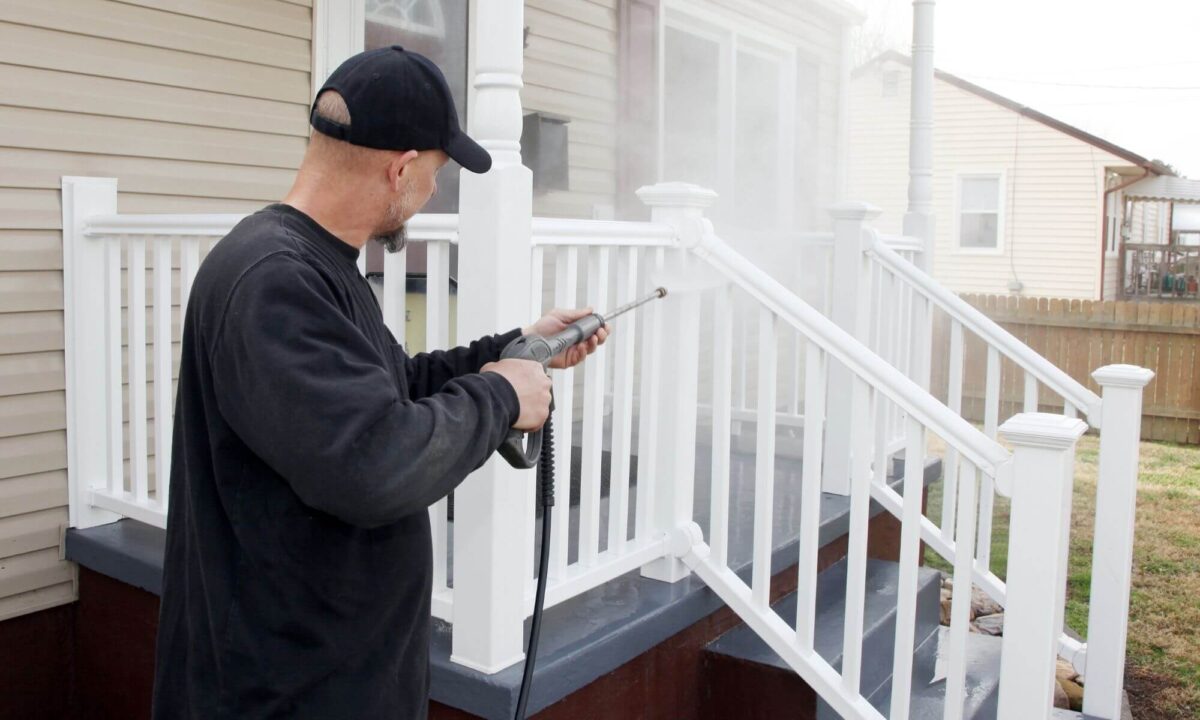
Use a 45-Degree Angle: Many newbie pressure washers hold the wand at a 90 degree angle, spraying directly down at a surface. This isn’t good. It pushes dirt and grime into the surface. Use a 45-degree angle instead, pushing dirt and grime away from the surface.
Prevent Streaks: By washing from the bottom and working up, you can prevent streaks on your surface. Work a small area at a time. Use long and overlapping strokes for even cleaning. It takes a bit of practice to do it right, but it’s satisfying to watch when done correctly.
Pressure washing isn’t challenging with a bit of preparation. By following the tips above, you can efficiently pressure wash any surface in your home – even if you’ve never held a pressure washer in your life.