Many homeowners and businesses across Long Island have wrought iron features on their property. It might be fencing, a driveway gate, or balustrades on the balcony. But whatever type of wrought iron you have you will eventually be faced with having to clean it. Of course, you always have the option of taking a bucket of soapy water and a sponge and washing it all down by hand. But who has the time or energy for that? Not a lot of people, which is probably why we get asked “Does power washing work on wrought iron?” all the time. Below we’ll address this question head-on.
First Things First: What Is Wrought Iron?

Wrought iron is an iron alloy that has a low carbon content when compared to something like cast iron. This makes it exceptionally malleable and flexible and able to be manipulated into virtually any shape the manufacturer has in mind. Humans have been enamored of wrought iron for centuries and have used it to serve a wide variety of purposes.
If we’re being more technical about it wrought iron forms a semi-fused mass characterized by its fibrous slags. These fibrous slags give it the appearance of having a grain, which appeals to many people. Wrought iron features can usually be expected to last for twenty years or more before they succumb to rust and erosion.
Six Fast Facts About Wrought Iron’s History
- Wrought iron emerged as an iron alloy with an exceptionally low carbon content (less than 0.035%), in stark contrast to cast iron’s higher carbon levels (ranging from 2% to 4%).
- Before steel became widely available, wrought iron was the most common form of malleable iron.
- When etched, rusted, or bent to failure, wrought iron reveals a wood-like “grain” due to fibrous slag inclusions (up to 2% by weight).
- The name “wrought” itself reflects its production process: hammered, rolled, or otherwise worked while hot enough to expel molten slag.
- Blacksmiths skillfully refined wrought iron, forging it into armor, weaponry, cutlery, springs, and files.
- During the 1860s, Wrought iron reached its peak demand, especially for ironclad warships and railways.

FAQs About Cleaning Wrought Iron Surfaces
ANSWER: In our opening, we mentioned using a bucket of soapy water, a sponge, and some elbow grease. And that method has indeed been used for centuries to clean wrought iron features. But it’s not the only way to clean wrought iron. Some people will substitute a stiff bristle brush for the sponge. If there is loose paint involved, it’s common to remove it with a wire brush or a drill with a wire wheel attachment before cleaning the wrought iron and repainting it. That, as you might imagine, is quite an involved process.
ANSWER: Pressure washing is a very effective method of cleaning wrought iron. It’s quick, effective, and affordable and it will leave your wrought iron squeaky clean. If you want to repaint your wrought iron features it’s also a great alternative to the wire brush or wire wheel option as it will remove just as much loose material in a fraction of the time.
ANSWER: Yes, pressure washing can be safe for wrought iron surfaces when done properly. Use a lower pressure setting (around 1500-2000 PSI) and a wide-angle nozzle to avoid damaging the delicate ironwork. Keep the nozzle at a safe distance from the surface and move it evenly across the iron to prevent harm.
ANSWER: Wrought iron fences require higher PSI levels than other materials to be cleaned effectively, as you can see in the infographic below. Our power washing professionals recommend a PSI of up to 2,300 when pressure washing wrought iron. This pressure level is sufficient to remove dirt and grime without causing damage to the surface. Start with the lowest pressure setting and gradually increase if necessary while monitoring the impact on the iron.
ANSWER: Mild detergents or cleaners designed for outdoor surfaces are suitable for pressure washing wrought iron. Avoid harsh chemicals that could corrode or discolor the iron. A solution of mild dish soap diluted in water can effectively clean wrought iron without causing damage.
ANSWER: Before pressure washing, it’s important to cover nearby plants, delicate landscaping, and electrical fixtures with plastic sheeting or tarps to prevent damage from overspray or debris. Be mindful of the direction of the spray to avoid water seeping into unwanted areas, such as adjacent buildings or structures. If the wrought iron features delicate decorative elements, consider handwashing or using a lower-pressure setting in those areas to avoid damage.
This is why it’s so important to make sure you hire experienced and well-trained power washing professionals. Pick the wrong person and they could cause more harm than good to your wrought iron surfaces and surrounding areas.
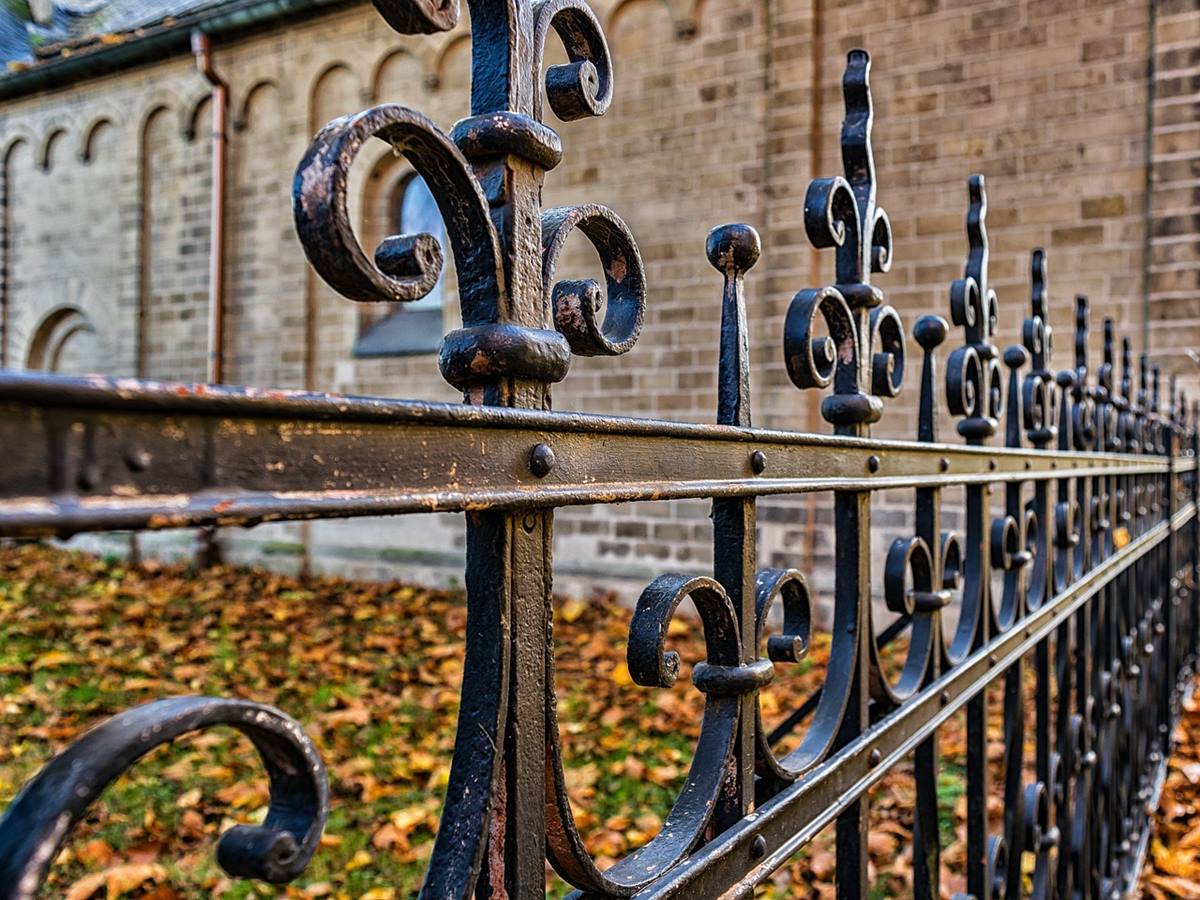
ANSWER: Pressure washing alone may not entirely remove rust from wrought iron surfaces. However, it can help to loosen and dislodge surface rust, making it easier to treat. To effectively remove rust, you may need to use a wire brush or sandpaper to scrub the affected areas after pressure washing. Additionally, applying a rust converter or primer specifically designed for metal surfaces can help prevent future rusting.
If there is a considerable amount of rust on your wrought iron features additional steps may be required. For instance, it may be necessary to use the dip and spray method. The process involves dipping the rusty wrought iron into a solution of muriatic acid and water, removing it, placing it somewhere out of the way, and then addressing it with the pressure washer. The following video demonstrates how easily the rust is removed using this method.
Pressure Washing PSI Levels By Fencing Material
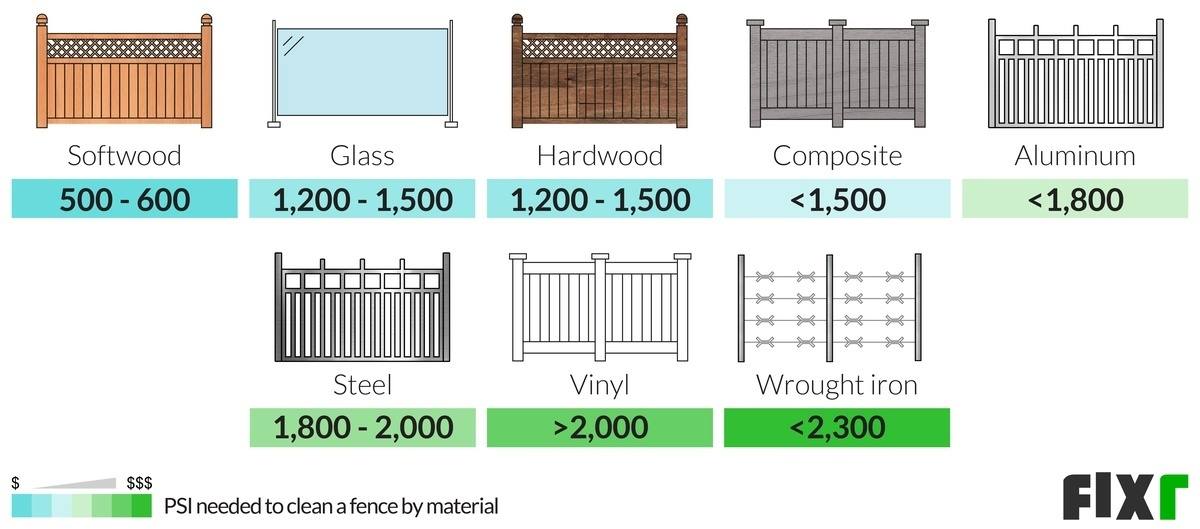
SOURCE: Fixr’s “Pressure Wash a Fence Cost Guide
How Our Pressure Washers Clean Wrought Iron
When you hire Majestic Windows & Exterior Cleaning to clean wrought iron surfaces, our professional power washers will typically take the following steps.
- Securing pets – Before we start we encourage the customer to secure any pets because the high-pressure water emanating from the device can be dangerous to them.
- Removing features – Any wrought iron features near other features of the house that can be easily removed are removed and relocated to a safe place for cleaning.
- Prepping the work area – If wrought iron features cannot be removed we cover plants and move outdoor furniture and anything else that might be affected by overspray.
- Selecting the right settings and nozzle – Our technician assesses the state of the wrought iron and whether loose material is involved before selecting just the right settings and nozzle.
- Observing best practices – During the cleaning process the technician uses appropriate PPE gear and operates the device in strict accordance with manufacturer guidelines.
As we said this method is only used in cases where there is a significant amount of rust involved. It’s also possible that the corrosion is too far advanced for this method to be of much use. You’ll need to have a pro assess the wrought iron first.
Contact Majestic
Using a power washer to clean wrought iron is a fast, safe, and effective way to restore it to its natural beauty. If you would like to learn more the team at Majestic Windows & Exterior Cleaning are easy to find. Just search for “pressure washing services near me” or call us at 631-421-2295.